From Eastleigh to Tatu City: Why the BBS Mall Developer’s KSh 65 Billion Bet Signals Kenya’s Next Urban Shift
When Abdiweli Hassan built the BBS Mall (Business Bay Square Mall) in Eastleigh, many saw it as bold. Few expected it would become one of East and Central Africa’s largest shopping and entertainment complexes, housing over 1,000 outlets and reshaping the commercial identity of an entire neighborhood.
Now, the BBS Mall developer is making an even bigger move.
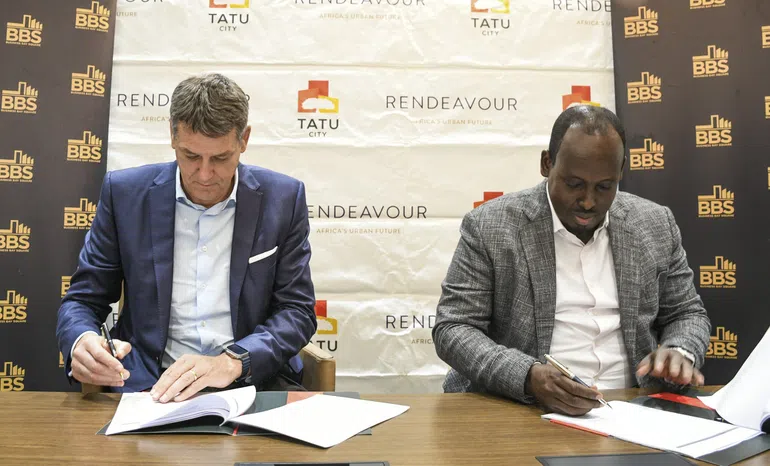
He has announced a KSh 65 billion mixed-use development in Tatu City Special Economic Zone, a 60-acre master-planned project that could redefine how private capital shapes Kenya’s future cities. And this time, it’s not just about retail. It’s about building an ecosystem.
The KSh 65 Billion Tatu City Project Explained
Located about 20 kilometres north of Nairobi CBD in Kiambu County, the new development will rise inside Tatu City SEZ, one of Kenya’s fastest-growing investment hubs.
The 10-year phased project will include:
- Residential housing units
- Retail and commercial spaces
- Office blocks
- Warehousing and logistics facilities linked to Tatu Industrial Park
- A mosque for community services
- A petrol station
- Over 30 acres of parks and green recreational space
Design work is already underway, with construction expected to begin within the next year.
This is not a single building. It is a long-term urban investment strategy.
Why the BBS Mall Developer Chose Tatu City
The move into Tatu City is strategic. Tatu City is a 5,000-acre master-planned Special Economic Zone designed as a live-work-play environment. It blends residential neighbourhoods, schools, business parks, retail districts, and industrial zones within one coordinated framework.
More than 100 companies already operate there, including
- Emirates Logistics
- Heineken
- Naivas
- NCBA
- Davis and Shirtliff
- Dormans
For a developer expanding beyond retail, this kind of ecosystem matters. It provides built-in demand for housing, commercial space, and logistics facilities. Instead of competing in congested city zones, the project taps into structured urban expansion.
The Power of Tatu City SEZ Incentives
One of the strongest attractions of Tatu City Special Economic Zone is its tax framework.
Companies operating within the SEZ benefit from:
- 10% corporate tax for the first 10 years
- 15% corporate tax for the following 10 years
- VAT zero-rating on goods and services
- Import duty exemptions
- Stamp duty exemptions
Compared to Kenya’s standard corporate tax rate of around 30%, these incentives significantly improve profitability. For commercial property investors, this translates into stronger tenant sustainability and potentially higher long-term yields.
From Mall Builder to City Maker
What makes this story compelling is not just the KSh 65 billion price tag. It reflects a broader shift in Kenya real estate investment.
Abdiweli Hassan built BBS Mall by understanding density, trade patterns, and community demand. Eastleigh was not just a location. It was a commercial engine waiting to be formalized. Now, instead of focusing on a single mega mall, he is participating in city-scale development.
The Tatu City mixed-use development spreads risk across multiple revenue streams
- Residential rentals
- Retail lease income
- Office occupancy
- Logistics and warehousing demand
This diversified structure is increasingly attractive in emerging urban markets.
What This Means for Real Estate Investors in Kenya
The BBS Mall developer’s entry into Tatu City signals strong investor confidence in planned urban growth.
Here’s why it matters:
1. Long-Term Capital Commitment
A 10-year phased timeline suggests structured absorption rather than speculative building.
2. Diversified Income Potential
Mixed-use developments reduce reliance on one asset class.
3. Growth Beyond Nairobi CBD
Urban expansion is moving toward satellite cities with better planning and infrastructure.
4. Rising Property Values in Tatu City
With cumulative investments surpassing KSh 450 billion, the ecosystem continues to deepen.
Large anchor projects often lift surrounding property values over time.
The Bigger Picture: Kenya’s Urban Evolution
Kenya’s population growth and economic expansion are reshaping how cities develop. Traditional city centres are facing congestion, infrastructure strain, and rising land costs. In contrast, master-planned environments like Tatu City offer coordinated growth, infrastructure readiness, and regulatory support.
The KSh 65 billion Tatu City project is not just about buildings. It is about positioning within Kenya’s next wave of structured urbanization.
From Retail Empire to City Development
Abdiweli Hassan transformed Eastleigh’s commercial landscape with BBS Mall.
Now, his investment in Tatu City Special Economic Zone marks a transition from retail empire builder to long-term city developer. If the past is any indicator, this move could influence how private developers approach large-scale urban projects in Kenya for the next decade.
And for investors watching the shift toward planned satellite cities, this may be one of the clearest signals yet that the future of Kenya real estate lies beyond the traditional core.