Meet the Owners of the Most Iconic Buildings in Kenya
Nairobi doesn’t just grow, it reinvents itself. What used to define the skyline, KICC, Times Tower, Hilton, now shares space with glass towers, bold designs, and skyline-defining skyscrapers. Behind these structures are powerful stories of ambition, legacy, and strategy.
Today, the owners of Kenya’s most iconic buildings are no longer just distant foreign investors or government bodies. They are real estate billionaires in Kenya, family empires, and sharp private investors quietly building legacies in concrete and glass.
So, who is shaping Kenya’s urban future? Let’s take a walk through iconic Kenyan architecture and the people behind it.
Where Old Meets New: From Colonial Landmarks to Modern Icons
To understand Nairobi’s skyline, you have to look both backward and forward. Landmarks like KICC still hold their place in history. If you’ve ever wondered who designed the KICC in Nairobi, it was the Norwegian architect Karl Henrik Nøstvik and the Kenyan planner David Mutiso. Its design was bold for its time, and its story is deeply tied to Kenya’s post-independence identity.
Then there are colonial era landmarks in Kenya and early modernist buildings in Nairobi, functional, well-structured, and built for longevity. Buildings such as the Norfolk Hotel, Nairobi Railway Station, and government offices like Nyayo House reflect this era. The designs focused more on durability and purpose than on height or aesthetics, yet many still stand strong and relevant today.
But today’s skyline tells a different story. It’s taller, smarter, and more intentionally shaped, blending iconic Kenyan architecture with global design and local ambition.
The Owners of the Most Iconic Buildings in Kenya
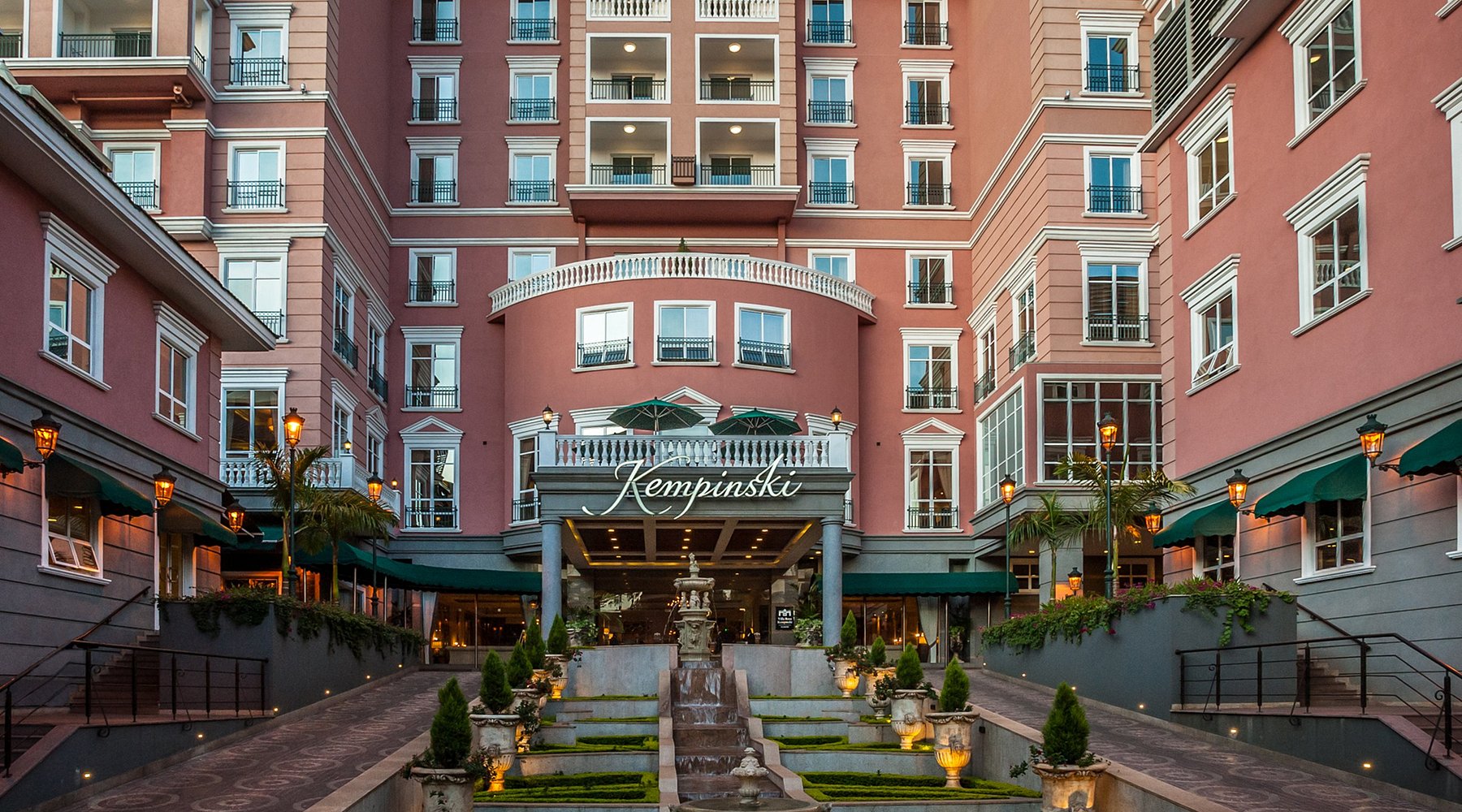
Villa Rosa Kempinski: Luxury Backed by Legacy
Drive along Chiromo Road and you can’t miss it. Villa Rosa Kempinski isn’t just a five-star hotel , it’s a statement. Opened in 2013, it brought a new level of luxury into Nairobi’s hospitality scene. With over 200 rooms and suites, including a presidential suite that has hosted global figures like Barack Obama, the building sits at the intersection of prestige and business.
Behind it is Adil Popat, through Simba Corporation, one of Kenya’s most established business empires. This is what happens when automotive wealth meets luxury real estate.
Britam Tower & UAP Old Mutual Tower Upper Hill
Upper Hill is where Nairobi shows its corporate muscle. The Owner of Britam Tower is Britam Holdings. Standing at 200.1 meters, it remains the tallest building in Kenya and a symbol of how local institutions are claiming dominance of the skyline.
Nearby, the UAP Old Mutual Tower Upper Hill adds to that presence. owned by UAP Old Mutual Group and reflecting the growing influence of financial institutions in real estate.It is also one of the few earthquake-resistant buildings in Nairobi, designed with modern engineering standards and built for long-term resilience.
GTC Towers
If you’ve ever wondered, “Which company owns GTC Nairobi?” the answer is AVIC International, a Chinese state-linked developer. The ownership of the GTC Towers represents a different side of Nairobi’s growth, one driven by international capital. As part of the Global Trade Centre complex, it’s among the most expensive buildings in Kenya, attracting multinational tenants and redefining Grade A office space.
It also signals that Nairobi is heading into a globally competitive commercial hub.
The Chancery Building
Not all iconic buildings shout for attention. Some operate quietly. The Chancery Building is linked to the Kenyatta family through Enke Investments. It has long been associated with influence and high-level meetings. Before his presidency, Uhuru Kenyatta reportedly used it as a private office.
The Chancery proves that in real estate, location matters, but ownership matters even more.
Lilian Towers
Some buildings are business decisions. Others are deeply personal. Lilian Towers falls in the latter category.
Built by the late billionaire Stanley Githunguri, it was named after his mother, a reminder that even in high-stakes real estate, legacy can be personal. Today, the building remains one of Nairobi’s recognizable structures, housing the Nairobi Safari Club. After his passing, it continues under his estate, a quiet symbol of generational wealth among property tycoons in Nairobi.
FCB Mihrab
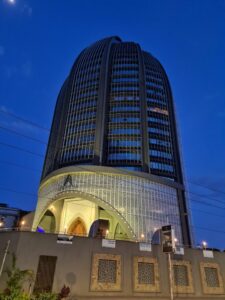
Along Lenana Road, one building stands out, not just in height, but in symbolism. FCB Mihrab was designed to resemble a mihrab, pointing toward Mecca. Owned by First Community Bank and key shareholders like Ahmednasir Abdullahi, it blends faith, identity, and business into a single structure.
The New Wave: Nairobi’s Next Skyline
Look around today and you’ll see cranes everywhere. Projects like Two Rivers, 88 Nairobi, and GTC are shaping what many now call the newest skyscrapers in Nairobi 2026. These developments are larger, mixed-use, and backed by complex ownership structures, from private equity to multinational partnerships.
They’re not just buildings ,they’re ecosystems.
So, Who Really Owns Nairobi’s Skyline?
If you strip it all down, the answer is layered. Some buildings are owned by corporates and institutional giants like Britam and UAP. Others belong to family dynasties like the Kenyattas or business figures like Adil Popat and Stanley Githunguri. And then there’s a growing presence of international investors, especially in premium developments.
But one thing is clear: Nairobi’s skyline is no longer accidental. It’s deliberate.

Avana Oasis Apartments on Riara Road, Nairobi
PQ37+487, Nairobi, Kenya
2 Bedroom Apartment for Sale on Riara Road, Lavington

3 Bedroom Apartment for Sale on Riara Road, Lavington

4 Bedroom Apartment for Sale on Riara Road, Lavington